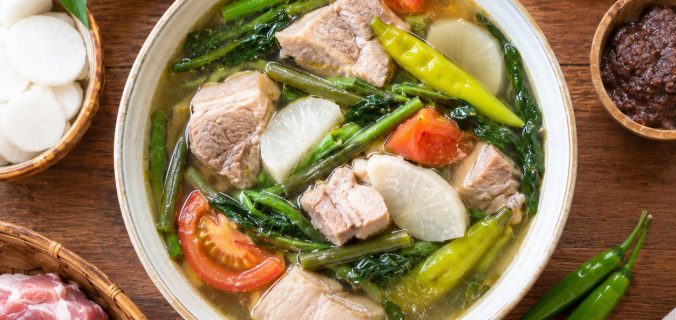
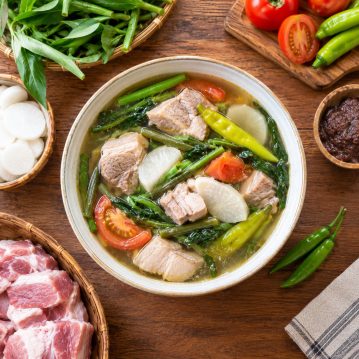
Sinigang recipe is a beloved Filipino soup known for its distinctive sour, savory, and comforting broth. Traditionally flavored with tamarind, the soup combines tender meat or seafood with vegetables such as radish, eggplant, okra, green beans, and water spinach.
Unlike many rich or heavily spiced soups, Sinigang gets its character primarily from its souring ingredient. Tamarind is the most traditional choice, although Filipino cooks may also use calamansi, green mango, kamias (bilimbi), or other sour fruits.
This Sinigang recipe uses pork, commonly known as Sinigang na Baboy, simmered until tender in a flavorful tamarind broth. It makes a hearty family meal and is especially delicious served hot with steamed white rice.
Brief Sinigang Recipe Information
Origin Country: Philippines
Servings: 4 servings
Calories per Serving: Approximately 430 kcal
Prep Time: 20 minutes
Cooking Time: 1 hour 15 minutes
Total Time: Approximately 1 hour 35 minutes
Keywords: Sinigang Recipe, Filipino Sinigang, Sinigang na Baboy, Pork Sinigang Recipe, Filipino Sour Soup
Note: Calories are estimates and can vary depending on the pork cut, amount of fat, vegetables, and tamarind seasoning used.
What Is Sinigang?
Sinigang is a traditional Filipino soup or stew characterized by its sour broth. The name is associated with a Filipino cooking method involving simmering meat, seafood, or vegetables in a souring broth.
Pork is one of the most popular versions, but Sinigang can also be prepared with shrimp (Sinigang na Hipon), fish, beef, chicken, or a combination of vegetables.
The sourness traditionally comes from fresh tamarind, although convenient tamarind paste, pulp, or powdered Sinigang mix is widely used in modern Filipino kitchens.
The soup typically contains vegetables such as:
- Daikon radish
- Eggplant
- Okra
- Green beans
- Tomatoes
- Water spinach (kangkong)
- Green chili peppers
Sinigang is commonly served with steamed rice, allowing the rice to absorb the intensely flavorful broth.
Ingredients for Sinigang Recipe
- 1.5 lb (700 g) pork belly, pork shoulder, or pork ribs, cut into serving pieces
- 8 cups water
- 1 medium onion, quartered
- 2 medium tomatoes, quartered
- 2 cloves garlic, crushed
- 2 tablespoons fish sauce
- 1–1½ cups tamarind pulp or approximately 3–4 tablespoons tamarind paste
- 1 teaspoon salt, or to taste
- ½ teaspoon ground black pepper
- 1 medium daikon radish, peeled and sliced
- 1 medium eggplant, sliced
- 6–8 okra pods
- 1 cup green beans, cut into 2-inch pieces
- 1–2 green chili peppers
- 2 cups water spinach (kangkong), cut into smaller pieces
- 1 cup bok choy or additional leafy greens, optional
To Serve
- Steamed white rice
- Fish sauce, optional
- Fresh chili peppers, optional
- Calamansi or lime wedges, optional
How to Make Sinigang Recipe
- Prepare the Pork : Rinse the pork if necessary and cut it into medium-sized pieces. For a richer Sinigang, pork belly or ribs work particularly well because their fat and connective tissue add flavor to the broth. Pork shoulder is a good alternative if you prefer a less fatty soup.
- Start the Broth : Place the pork in a large pot and add approximately 8 cups of water. Bring the water to a boil over medium-high heat. Skim off any foam or impurities that rise to the surface. Add the onion, tomatoes, and crushed garlic. Reduce the heat to low and allow the pork to simmer gently.
- Simmer Until the Pork Is Tender : Cover the pot partially and simmer for approximately 45–60 minutes, depending on the cut and size of the pork pieces. The pork should become tender but should not fall apart completely. If the water level drops too much during cooking, add a little more hot water.
- Add the Tamarind : Once the pork is tender, add the tamarind pulp or tamarind paste. Stir thoroughly and taste the broth. Sinigang should have a noticeable sour flavor, but the acidity should be balanced by the savory pork broth. If using fresh tamarind pulp, strain it first to remove seeds and fibers.
- Add the Harder Vegetables : Add the daikon radish and green beans first. Simmer for approximately 5–7 minutes. These vegetables require more cooking time than the leafy greens and should become tender while retaining some texture.
- Add the Remaining Vegetables : Add the eggplant, okra, and green chili peppers. Cook for another 5–7 minutes, or until the vegetables are tender. Avoid overcooking them because Sinigang is particularly enjoyable when the vegetables still have some bite.
- Season the Soup : Add fish sauce, salt, and black pepper. Taste the broth and adjust the seasoning. If it is not sour enough, add a little more tamarind. If the sourness is too strong, add a small amount of water or broth to dilute it.
- Add the Leafy Greens : Add the kangkong or other leafy greens near the end of cooking. Simmer for approximately 1– 2 minutes, just until the leaves and stems are tender. Turn off the heat.
- Serve : Ladle the hot Sinigang into serving bowls. Serve immediately with steamed white rice. For additional flavor, serve with extra fish sauce, fresh chili, or calamansi on the side.
Tips for Making the Best Sinigang
1. Choose the Right Pork Cut
Pork ribs, pork belly, and pork shoulder all work well.
Pork ribs produce a particularly flavorful broth, while pork belly gives the soup a richer and more luxurious texture.
For a lighter version, use lean pork shoulder and trim excess fat.
2. Don’t Add All the Vegetables at Once
Different vegetables require different cooking times.
Start with firm vegetables such as radish and green beans, followed by eggplant and okra. Add leafy vegetables near the end.
This keeps the vegetables from becoming mushy.
3. Adjust the Sourness Gradually
Tamarind can vary significantly in acidity.
Instead of adding a large quantity at once, add it gradually and taste the broth between additions.
The ideal Sinigang should taste distinctly sour without completely overpowering the savory broth.
4. Use Tomatoes for Extra Depth
Fresh tomatoes add natural acidity and subtle sweetness to the broth.
They also help create the characteristic savory flavor associated with many versions of Filipino Sinigang.
5. Don’t Boil the Soup Too Aggressively
Once the pork has started cooking, maintain a gentle simmer.
A slow simmer helps tenderize the pork and allows the flavors to develop without making the broth unnecessarily cloudy.
6. Let the Soup Rest Briefly
Allow the finished Sinigang to sit for approximately 5 minutes before serving.
This gives the flavors a chance to settle and makes it easier to judge the final seasoning.
7. Serve With Plenty of Rice
Sinigang is traditionally enjoyed with steamed rice.
The rice balances the strong sourness of the soup and absorbs the flavorful broth.
Sinigang Variations
Sinigang na Hipon
Shrimp is used instead of pork. Because shrimp cooks much faster, it should be added toward the end of cooking.
Sinigang na Isda
Fish can be used for a lighter version. Firm-fleshed fish works particularly well because it is less likely to break apart during simmering.
Sinigang na Baka
Beef ribs or other suitable beef cuts can be slowly simmered until tender before adding the sour broth and vegetables.
Sinigang na Manok
Chicken provides a lighter alternative to pork. Chicken thighs are particularly suitable because they remain moist during cooking.
Seafood Sinigang
A combination of shrimp, fish, squid, or other seafood can be used to create a flavorful seafood version.
Vegetarian Sinigang
Simply omit the meat and use mushrooms, tofu, radish, eggplant, okra, green beans, tomatoes, and leafy greens. Vegetable stock can be used instead of water for a deeper flavor.
Frequently Asked Questions About Sinigang
What is Sinigang?
Sinigang is a traditional Filipino sour soup made with meat, seafood, or vegetables and a souring ingredient, most commonly tamarind. Pork Sinigang is one of the most popular versions.
What makes Sinigang sour?
Traditional Sinigang is commonly made sour with tamarind. Other souring ingredients can include calamansi, green mango, kamias, or other acidic fruits.
What meat is traditionally used in Sinigang?
Pork is one of the most common choices, particularly pork belly, ribs, or shoulder. However, Sinigang can also be made with shrimp, fish, beef, chicken, or vegetables.
Can I use tamarind paste instead of fresh tamarind?
Yes. Tamarind paste is a convenient substitute for fresh tamarind and makes it easier to control the sourness of the broth. Add it gradually because the acidity varies between brands.
Can I use Sinigang mix?
Yes. Commercial Sinigang seasoning mixes are widely used in Filipino cooking. They provide a convenient way to create the characteristic sour flavor, although fresh tamarind can provide a more natural flavor.
What vegetables go into Sinigang?
Common vegetables include daikon radish, eggplant, okra, green beans, tomatoes, green chili peppers, and kangkong or water spinach.
Can I make Sinigang without pork?
Absolutely. Shrimp, fish, chicken, beef, tofu, mushrooms, or vegetables can be used instead of pork.
How do I make Sinigang less sour?
Add more water or unsalted broth to dilute the acidity. You can also increase the amount of savory ingredients and vegetables. Adjust gradually rather than adding a large amount of liquid at once.
How do I make Sinigang more sour?
Add additional tamarind pulp or paste in small amounts until you reach the desired level of sourness. Calamansi or another souring ingredient can also be used.
What should I serve with Sinigang?
Sinigang is traditionally served with steamed white rice. Extra fish sauce, fresh chili, and calamansi can be served on the side.
How long does Sinigang last in the refrigerator?
Properly stored in an airtight container and refrigerated promptly, cooked Sinigang can generally be kept for about 3–4 days. Reheat only the portion you intend to eat.
Can Sinigang be frozen?
Yes. The pork and broth freeze well. However, vegetables such as eggplant, okra, and leafy greens can become softer after freezing and thawing. For the best texture, you can add fresh vegetables when reheating.
Final Thoughts
Sinigang is more than just a Filipino soup—it is a comforting combination of tender meat, fresh vegetables, savory broth, and distinctive tamarind sourness. Its flexibility is one of its greatest strengths, allowing cooks to adapt the recipe with pork, seafood, beef, chicken, or vegetables.
For a classic version, start with pork, tamarind, tomatoes, radish, eggplant, okra, green beans, and kangkong. Serve the finished soup piping hot alongside steamed rice for a satisfying Filipino meal.